
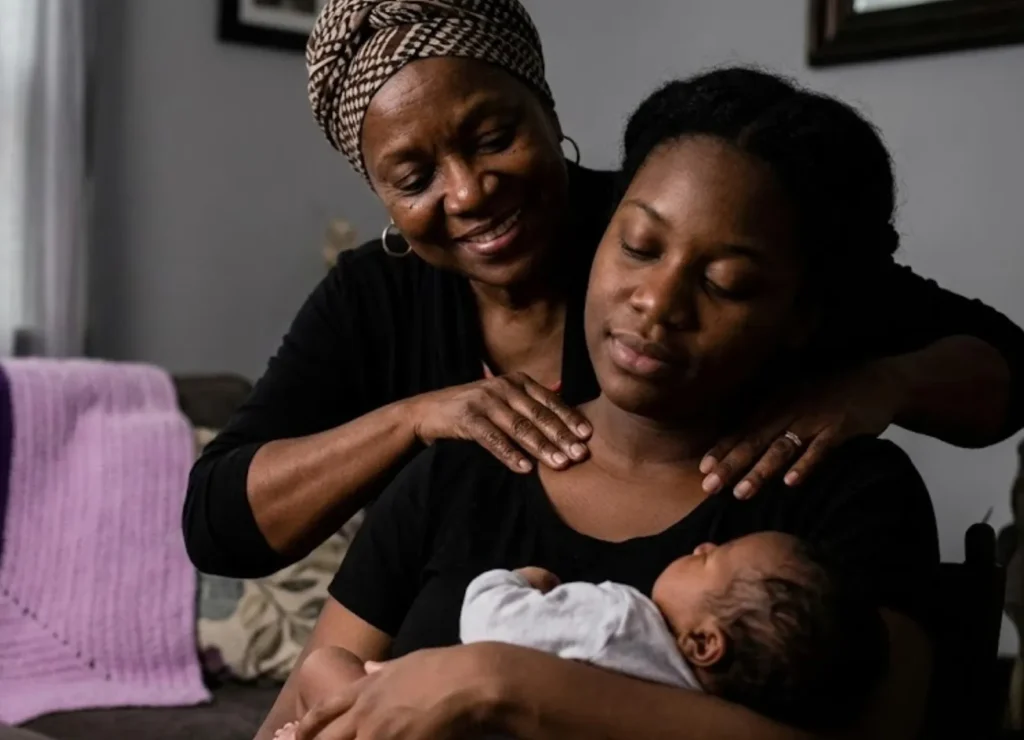
In many African homes, especially within Igbo culture, childbirth is not treated as an individual experience, it is treated as a shared responsibility. The arrival of a newborn is followed by a quiet but powerful system of care known as Omugwo. It is not just tradition; it is a structured period where the new mother is intentionally shielded from physical strain so her body can recover while she learns to adjust to life with her baby. At its core, Omugwo is about restoration of the mother, the baby, and the household rhythm that childbirth temporarily disrupts.
One of the most immediate benefits of Omugwo is the relief it gives the new mother from daily physical demands. After childbirth, the body is in a fragile state of healing. During this period, a trusted female relative often the mother, mother-in-law, or an experienced caregiver steps in to take over cooking, cleaning, and newborn care. This allows the mother to rest properly, regain strength, and focus on breastfeeding and recovery without the pressure of household responsibilities.
Omugwo is often supported by long-standing traditional practices that focus on recovery and nourishment. These may include warm herbal baths to support healing, gentle body massages to ease muscle tension, and carefully prepared meals and soups believed to support blood restoration and milk production. While these practices vary across families, they reflect a shared understanding: postpartum recovery requires intentional care, not guesswork.
In the early weeks after delivery, both mother and baby are more vulnerable to infection. During Omugwo, the caregiver often ensures that the environment remains clean, bathing routines are properly managed, and newborn care is handled with attention to hygiene. This support reduces health risks and gives the mother confidence that both she and her baby are being cared for safely.
Postpartum life can feel emotionally unpredictable. Hormonal changes, sleep deprivation, and the demands of newborn care can leave a mother feeling overwhelmed. The presence of a trusted older woman provides more than physical help, it provides emotional grounding. Having someone nearby who understands what this stage looks like helps reduce anxiety and offers quiet reassurance during difficult moments.
Beyond emotional comfort, Omugwo is also a learning period. The visiting caregiver often shares practical advice drawn from lived experience; how to interpret a baby’s cries, how to manage feeding patterns, how to care for healing stitches or a recovering body. For first-time mothers especially, this kind of hands-on guidance can be more valuable than theoretical information.
Omugwo also serves a deeper cultural purpose. It creates a bridge between generations, where knowledge, values, and caregiving practices are passed down naturally within the home. It is one of the ways motherhood is not only experienced but also taught, preserved, and respected within the family system.
One of the most defining strengths of Omugwo is that it removes the idea that motherhood is a solo responsibility. Instead, care is distributed within the family system. This shared approach ensures that the mother is not isolated during recovery and that the baby is cared for consistently while the mother heals.
With this support system in place, the new mother is not forced to immediately resume full household or professional responsibilities. Instead, she transitions gradually, allowing her body and mind to adjust at a sustainable pace. This reduces burnout and supports long-term well-being.
Within the Omugwo structure, women, especially older women play a central role in sustaining family health during postpartum. This role carries respect and recognition, reinforcing their importance within the family and community structure. It is not informal help; it is structured care that holds real social value.
While the foundation of Omugwo remains deeply traditional, modern families are adapting it to fit current lifestyles. In urban settings or where extended family support is limited, some households now combine traditional care with professional postpartum support such as nurses, doulas, or trained caregivers. Others adapt the timing or structure of Omugwo to align with work schedules and medical guidance.
Despite these changes, the principle remains the same; the mother should not navigate postpartum recovery alone. Whether through family, professionals, or a blend of both, the goal is comprehensive support that prioritizes healing and stability.
At its core, Omugwo is more than a cultural practice, it is a structured system of care that recognizes the intensity of childbirth and responds with presence, rest, and support. It protects the mother during one of the most vulnerable periods of her life, strengthens family bonds, and ensures that recovery is not rushed or neglected. In a world where postpartum care is often fragmented, Omugwo stands as a reminder that healing is faster and deeper when it is shared.